Recording...
Spin Results
Wheel Entries
Add, edit, and colorize
0
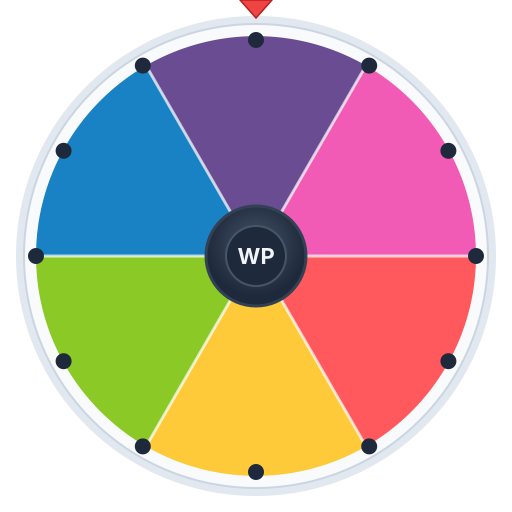
Can't decide? Let the wheel choose for you. Spin for a random yes, no, or any custom answer instantly.
Paste your list below, one item per line
A coin is a fine tool for a truly binary question, but most “yes or no” questions are secretly wearing a trench coat over three or four real answers. Should you text them back? The honest options are yes, no, and not until tomorrow. Should you buy the thing? Yes, no, and wait for it to go on sale. A coin physically cannot say “ask again later.” The wheel can.
That’s the quiet superpower of a yes or no wheel: it starts at 50/50 but doesn’t have to stay there. Add a Maybe slice for questions that deserve some wobble. Add “Ask again in an hour” for decisions that are really about timing. Add “Yes, but small” for the commitments you want to ease into. Each slice you add reshapes the odds evenly, so the wheel stays fair — it just gets more honest about what you’re actually choosing between.
And unlike the coin, the wheel performs. The spin, the slowdown, the landing — everyone leans in. No one has ever leaned in for a coin that fell on the floor.
Here’s the technique that turns a novelty wheel into a genuinely useful decision tool: spin it, and then — before you act on the answer — notice your very first reaction to it. Not your reasoned response. The flicker before that.
If the wheel says No and something in you deflates, congratulations: you wanted Yes the whole time, and no pro/con list was going to surface that as fast as three seconds of spinning did. If the wheel says Yes and you feel a wash of relief, same thing in reverse. The wheel isn’t deciding for you; it’s running a tiny experiment where, for one moment, the decision is out of your hands — and your gut finally files its report.
This is why the wheel works even if you ignore its answer. Overruling the spin isn’t cheating; it’s the whole point. You came in stuck between two options that felt equal. You leave knowing they weren’t. Spin, react, decide — in that order.
Once plain Yes/No feels too vanilla, the wheel takes modifications beautifully. Try a weighted feelings wheel: stack the deck to match your actual lean by duplicating slices. Three Yes, one No is an honest wheel for a decision you’re mostly sold on — you’re not asking the wheel to choose, you’re asking it for a one-in-four chance to save you from yourself.
Best-of-three turns a single verdict into a tiny series, complete with comebacks and a match point. It’s the right format when two people disagree, because losing two out of three feels legitimately settled in a way one spin never quite does.
Shades-of-yes replaces the binary entirely: “Yes, today,” “Yes, this week,” “No, and stop asking,” “Ask a friend first.” It works because most stuck decisions aren’t about whether — they’re about when and how much.
Whatever variant you run, announce the rules before spinning. The wheel’s authority is exactly as strong as everyone’s agreement that the next spin counts.