Recording...
Spin Results
Wheel Entries
Add, edit, and colorize
0
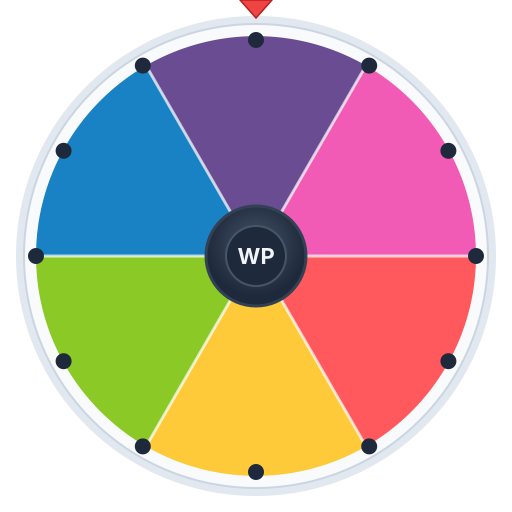
Heads or tails? Flip a virtual coin with our spinner! Fair 50/50 odds with confetti celebration on every flip.
Paste your list below, one item per line
A physical coin flip is over almost before it starts: a flick, a blur, a palm slap, and one person announcing a result that nobody else actually saw. It works, but it’s a terrible show — and for a ritual whose entire job is making both sides feel the outcome was fair, the show matters.
The wheel fixes the theater without touching the math. Heads and tails still split the odds exactly down the middle, but now the decision plays out in public: the wheel spins, slows, teases the line between the two halves, and lands where everyone can see it. Nobody palms a wheel. Nobody drops it under a car. Nobody claims it “hit the table so it doesn’t count.”
And the wheel does two things metal never will. It’s recordable — capture the flip as a video and the loser can rewatch their defeat in high definition — and it’s editable, so heads and tails can become the actual stakes: “we get sushi” versus “we get tacos.” The suspense of a coin, minus the pocket-fumbling.
A single flip settles a question; a series settles it convincingly. Best-of-three is the workhorse format: quick enough for a lunch-line dispute, long enough that the loser can’t blame one freak result. Best-of-five is for genuine stakes — who gets the window seat for the whole trip — and comes with real narrative arcs: the 2–0 collapse, the match-point save, the decisive fifth flip with the whole group leaning in.
The single unbreakable rule: declare the format before the first spin. A series whose length changes after someone falls behind isn’t a series, it’s a negotiation, and the wheel can’t save you from that.
For groups, run a bracket. Eight people, four head-to-head flips, then semifinals, then a final — a full tournament of pure chance takes about five minutes and produces a champion who earned absolutely nothing, which is somehow funnier every time. Record the final if the title carries privileges, like shotgun rights for a month. Future disputes will demand video evidence.
The coin flip survives as a ritual because it does something quietly clever: it converts an endless deliberation into a single, final moment. You can borrow that power deliberately.
The classic is the gut-check flip: spin the wheel and watch your own reaction mid-spin. Somewhere before it lands, you’ll catch yourself rooting for a side — and that’s your answer, whatever the wheel says. The flip didn’t choose; it interrogated you, and it worked faster than a week of overthinking.
For recurring standoffs, try the standing flip: agree that certain disputes — who picks the restaurant, who takes the bins out — always go to the wheel, no debate permitted. It sounds silly and saves relationships, because nobody is ever the villain; the wheel is.
And for the truly stuck, the deadline flip: if you haven’t decided by an agreed time, the wheel decides at that time, no appeals. Knowing randomness is scheduled has a magical way of helping people discover their real preference about an hour beforehand.